
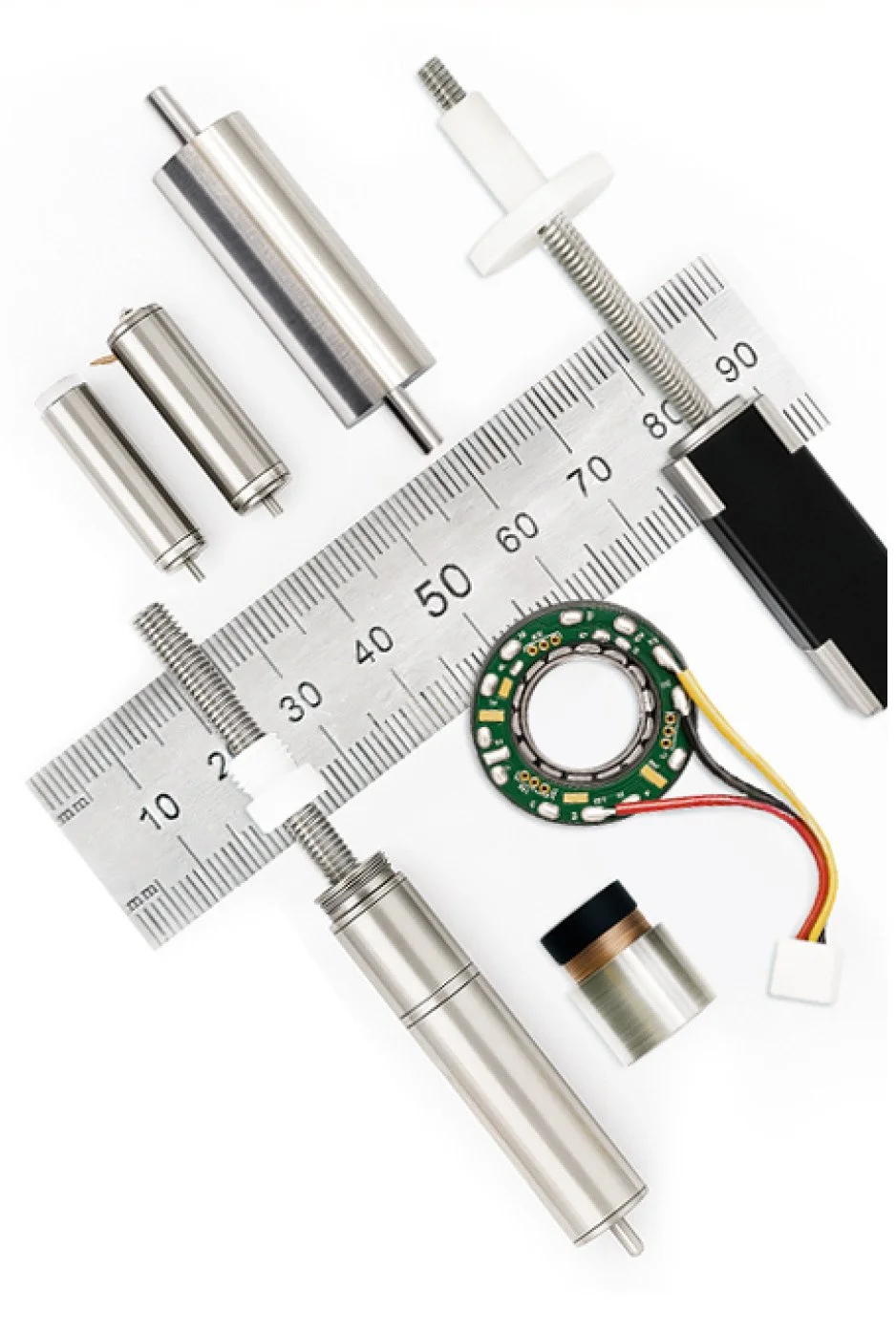
As robotics, medical devices, semiconductor equipment, and optical systems continue to shrink, motion control is being pushed into extremely tight mechanical envelopes. Engineers are now expected to deliver micron-level accuracy, fast response, low vibration, and long-term reliability inside systems measured in millimeters. At this scale, motion control is no longer a supporting feature. It becomes a defining performance limit of the entire machine.
Ultra-compact motion control is not simply traditional motion made smaller. When systems reach millimeter dimensions, friction, thermal behavior, vibration, electrical noise, and mechanical tolerances all behave differently than they do at larger sizes. Design decisions that were once forgiving now become critical.
Why Miniature Motion Behaves Differently Than Full-Scale Systems
At small scale, surface effects dominate system behavior. Friction consumes a larger percentage of available force. Heat builds faster due to limited thermal mass. Lubrication behaves differently at micro contact points. Even small alignment errors can introduce measurable positioning error.
This is why engineers designing with miniature motion components must think beyond basic force, speed, and torque ratings. Thermal stability, repeatability, and vibration control often become the real performance bottlenecks.
What Engineers Evaluate in Miniature Linear Motion

Ultra-compact linear motion is commonly used for optical focusing, micro-dispensing, sample positioning, medical dosing, and compact automation stages. In these applications, the most important questions engineers ask are whether the system can repeatedly hit the same position within microns over long life, whether force remains stable as temperature changes, how sensitive accuracy is to mounting orientation or side loading, and how wear impacts repeatability after millions of cycles.
At millimeter scale, screw geometry, alignment quality, and feedback resolution directly determine whether a system remains predictable over time. Designers must carefully balance force, speed, precision, and stability inside extremely confined spaces.
Why Miniature Rotary and Gear Systems Are Not Just About Speed
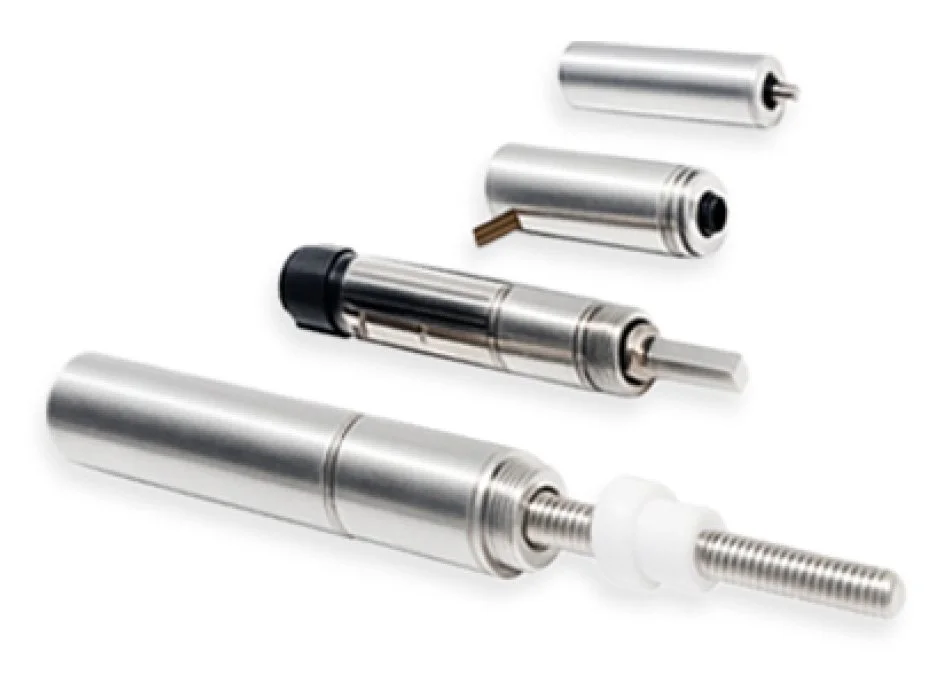
Miniature rotary motion is essential for robotic joints, sensor positioning, optical modules, and compact handling mechanisms. At these sizes, smooth torque delivery and control stability matter far more than raw RPM.
Gear reduction is often necessary to achieve usable output torque, but it introduces new challenges. Backlash, acoustic noise, efficiency loss, and wear all have far greater impact at small scale. Even tiny amounts of backlash can degrade robotic grip precision or optical alignment accuracy.
As a result, engineers increasingly evaluate miniature rotary systems as control systems problems, not just mechanical ones.
Why Direct Drive Is Often Required for Zero-Backlash Applications
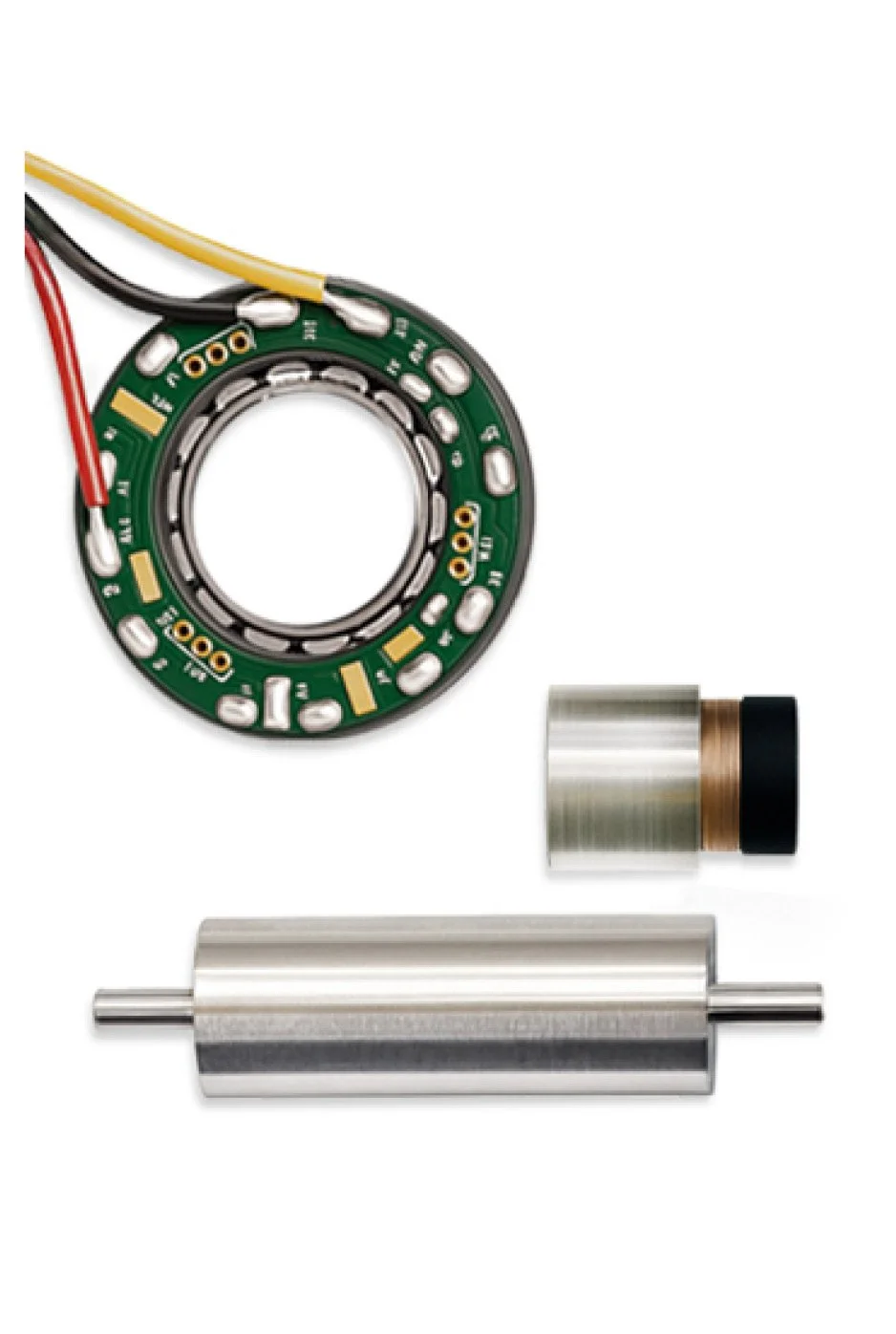
For applications such as optical focusing, semiconductor inspection, and high-precision positioning stages, even minimal mechanical compliance becomes unacceptable. Direct-drive miniature motion eliminates gears and transmission components entirely, removing the largest source of mechanical uncertainty.
By generating motion directly through electromagnetic force, these systems achieve superior repeatability, fast response, and long-term stability. However, they also place higher demands on motor control quality, feedback resolution, and thermal management.
Thermal Behavior Becomes a Limiting Design Factor
At millimeter scale, thermal equilibrium happens quickly. Even small inefficiencies translate into measurable temperature rise, which then alters magnetic strength, electrical resistance, lubrication behavior, and mechanical tolerances.
Many miniature motion systems perform well in short lab tests, only to drift out of specification during continuous operation. Engineers who treat thermal behavior as a first-order design requirement consistently achieve more stable long-term performance.
Why Vibration and Noise Directly Affect Accuracy
Vibration at miniature scale is not cosmetic. It couples directly into positioning error, feedback instability, and optical contamination. Motors that appear smooth to the eye can still generate micro-vibrations that corrupt sub-micron motion.
Acoustic noise often reveals deeper control issues such as commutation ripple, cogging, or mechanical imbalance. These effects appear in both encoder data and mechanical wear patterns.
Where Ultra-Compact Precision Motion Is Used
Miniature motion control plays a foundational role in robotic hands and micro-manipulators, optical focusing modules, sensor alignment systems, medical and biotech instruments, semiconductor inspection and handling equipment, and compact automation platforms. In all of these systems, motion quality directly determines machine performance.
The Future of Ultra-Compact Motion Systems
The industry continues to move toward higher precision per unit volume, lower noise floors, improved thermal efficiency, and tighter feedback integration. Engineers no longer accept performance tradeoffs simply to save space. They now expect both miniaturization and high dynamic accuracy.
As automation advances deeper into healthcare, robotics, optics, and semiconductor manufacturing, ultra-compact motion systems will increasingly define how far these platforms can evolve.
At the millimeter scale, motion performance is defined not by marketing specifications but by how predictable a system remains across thermal variation, dynamic load, vibration exposure, and millions of cycles in real operating environments.
For engineers who need ultra-compact motion without compromising precision, stability, or long-term reliability, DINGS’ miniature motion technologies represent a best-in-class solution. From micro linear positioning to high-response rotary and direct-drive systems, DINGS’ products are engineered for real-world performance in the most space-constrained, high-precision applications.